The Smell of Turmeric at 5 AM
I was five years old the first time I understood that food was a language.
It was still dark outside. My grandmother was already at the kitchen hearth. I could hear the mustard seeds hitting the oil from three rooms away — that short, violent pop, pop, pop that meant morning had begun and something warm was coming. I padded out in bare feet and stood in the doorway. She did not look up. She never looked up when she cooked. The turmeric went in. The whole kitchen turned golden.
I did not know it then, but I was being educated. Every morning in that village kitchen was a lesson I would spend the rest of my life applying.
When the Kitchen Followed Me — and the Food Didn’t
Years later, living far from that village, I tried to make my grandmother’s sambar for a group of friends. Same recipe. Same steps. The sambar was technically correct — the right colour, the right consistency. But it did not taste like anything. Not like nothing. Worse. It tasted like an approximation of something real. I called my grandmother that evening and told her what happened. She was quiet for a moment.
“The spices in those shop packets,” she said, “have been sitting since before you started cooking. Spice has a life, kutty. When the life is gone, the taste is gone.”
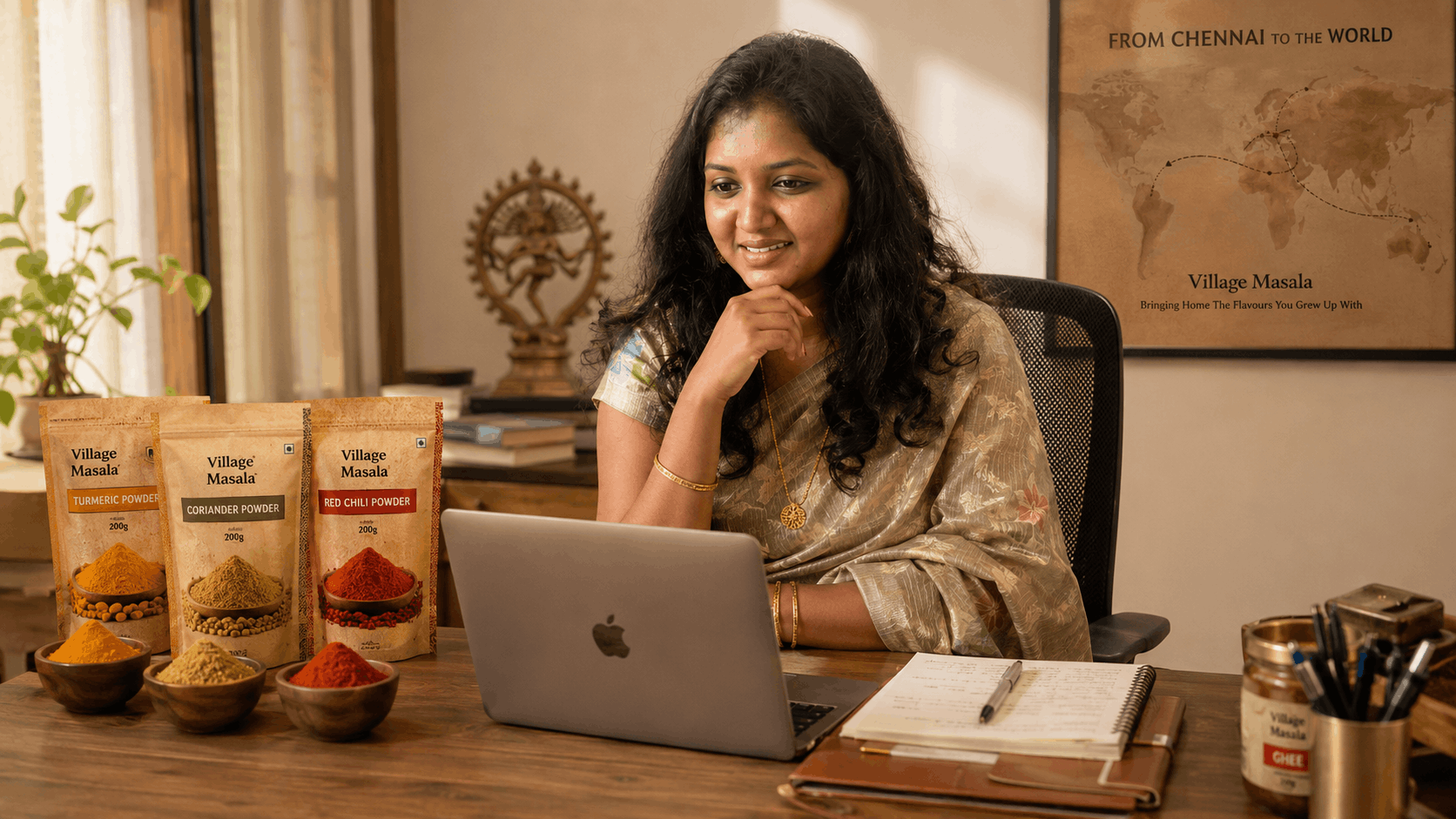
That sentence was the beginning of Village Masala.
“I was not trying to build a business. I was trying to remake my grandmother’s sambar. The business came from the gap between those two things.”
What Village Masala Was Built to Do
The more I talked to Indian families living abroad, the more I understood this was not my problem alone. Everyone had the same story. The curry that almost tasted right. The pickle that was nothing like their mother’s. The filter coffee that was technically coffee but not the memory of coffee.
The recipes were intact — passed down through phone calls and handwritten notes. The problem was always the ingredient. Somewhere between the farm and the shelf, the volatile oils had faded, the curcumin had degraded, the life had gone out.
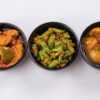
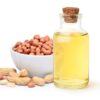
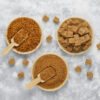
So we went back to the source. Erode turmeric, Kerala black pepper, cold-pressed gingelly oil from South Indian wooden-press mills. Traditional pickle recipes made with the right salt and enough time to actually ferment. Heritage rice varieties that the mainstream market had abandoned. Each product at Village Masala exists because someone, somewhere, needed the real version — not a substitute, not an approximation.
My grandmother never measured anything. She crushed a cumin seed between her fingers and smelled it before adding it to the pan. She was measuring something no unit had been invented for yet — freshness, aliveness, the presence of the thing itself. We built Village Masala to deliver exactly that, to every Indian kitchen in the world that is trying to find its way back home.