Indian Pickles (Achar) 101: How to Use, Store, and Pair Every Type
In most Western food cultures, pickles are a single supporting player — a slice of gherkin on the side of a burger. In Indian food culture, pickles are a category unto themselves. Entire culinary traditions are built around them. An Indian thali without at least one pickle feels underdressed. A curd rice without a smear of mango pickle is incomplete. At Village Masala, we produce and stock a wide range of traditional Indian pickles — made using age-old recipes, traditional spice blends, and the right oils and salting methods that produce a depth of flavour no commercial shortcut can replicate.
The Major Types of Indian Pickle and Their Uses
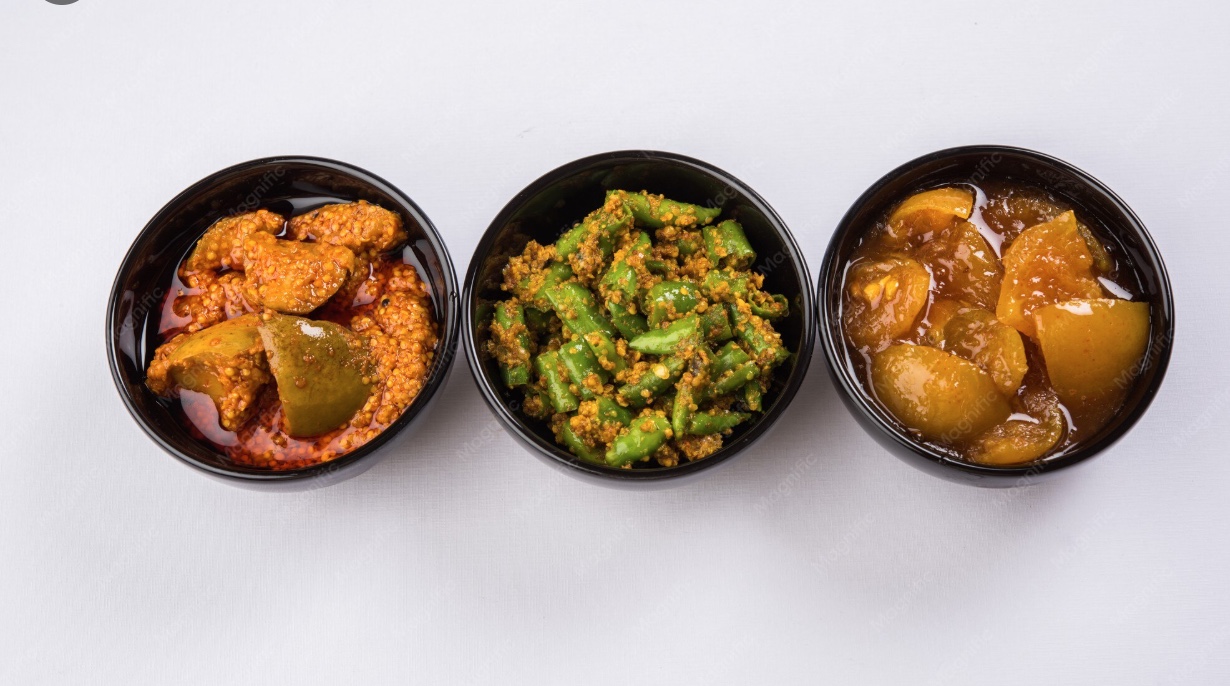
Mango pickle (aam ka achar) is India’s most loved pickle — made from raw green mangoes, cut and mixed with mustard seeds, turmeric, red chilli, salt, and either mustard oil or gingelly oil, then left to mature in the sun or in sealed jars for weeks or months. The longer it matures, the more complex it becomes. Use it with dal-rice, paratha, curd rice, or simply as a relish alongside any meal.
Lemon pickle is gentler, more sour, and slightly more versatile — it works as a condiment for biryani, rice, or roti, and as an ingredient in its own right in dressings and marinades. Garlic pickle has a punchy, fermented depth that pairs brilliantly with plain yoghurt rice. Chilli pickle is for those who want heat without compromise. Citron pickle (narthangai) is a specifically South Indian variety made with the bitter citron fruit — intensely sour, powerfully flavoured, and considered a digestive aid in traditional medicine
” Indian pickles made with mustard oil or gingelly oil are not just flavour vehicles — they are probiotic foods. The salt, oil, and natural fermentation process creates an environment where beneficial bacteria thrive, supporting gut health and digestion “
Less-Known Pickles Worth Discovering
Beyond the classics, India’s pickle tradition includes some extraordinary regional specialities. Pirandai (veldt grape) pickle is a traditional South Indian variety made from a medicinal climbing plant — the pickle is intensely flavoured and is valued in traditional medicine for joint health and digestion. Bitter gourd pickle uses a vegetable that most people consider difficult to eat and transforms it into something complex and craveable through the alchemy of salt, oil, and spice.
Amla (Indian gooseberry) pickle is one of India’s most nutritionally significant condiments — amla is extraordinarily rich in Vitamin C (20 times more than orange), and pickling preserves this content while adding layers of flavour. Mint and coriander pickles are fresher, herb-forward versions that work especially well as accompaniments to grilled meats or as sandwich spreads.


How to Store Pickles and Extend Their Life
Traditional Indian pickles are designed to last — the combination of oil, salt, and acidity creates an environment hostile to harmful bacteria. Store pickles at room temperature in a cool, dark cupboard; refrigeration is not necessary and can dull the flavours. Always use a dry spoon when scooping — even a drop of water in the pickle jar can introduce mould-causing bacteria.
Oil-based pickles from Village Masala typically have a shelf life of 6–12 months when stored properly. Always ensure the oil layer covers the pickle completely — if it recedes over time, add a small amount of the appropriate oil (mustard or gingelly) to top it up. Well-stored mango pickle actually improves with age — the flavours deepen and integrate in ways that make a six-month-old jar significantly better than a fresh one.