A Complete Guide to Indian Festival Sweets: Recipes, Traditions, and What Makes Each One Special
Indian sweets are not just dessert. They are ritual, celebration, memory, and community. They are what you make when someone is born, when someone gets married, when a festival arrives, when you want to say thank you, or when you simply want to make someone feel loved. Every region of India has its own sweets, its own occasions, its own masters of the craft. At Village Masala, we stock the finest sweets made using traditional recipes and authentic ingredients — and we want to share the stories behind them.
South Indian Sweets: Mysore Pak, Adhirasam, and More
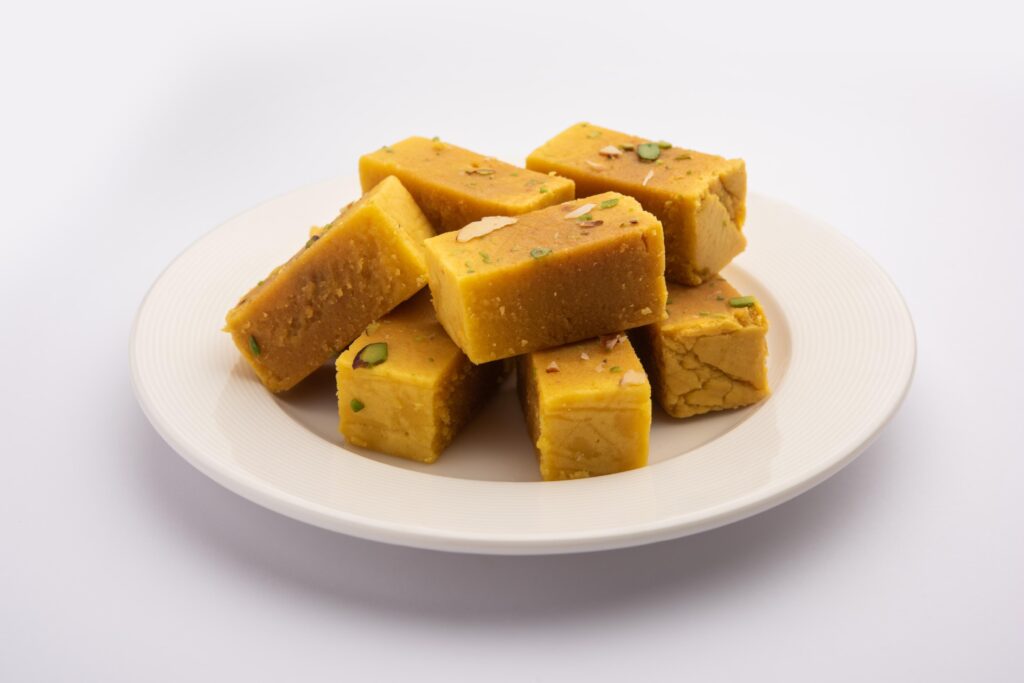
Mysore Pak is the jewel of Karnataka — a dense, crumbly sweet made from gram flour (besan), sugar, and pure ghee, cooked until it reaches a specific granular texture. The best Mysore Pak is made with so much ghee that it practically melts in your mouth. The recipe is simple; the technique requires experience. The gram flour must be roasted slowly to remove all rawness; the ghee must be added in stages, not all at once.
Adhirasam is a Tamil Nadu special — a deep-fried sweet made from rice flour and jaggery, soft inside and slightly crispy outside, traditionally made during Diwali and Karthigai Deepam. It is one of the oldest Tamil sweets, with references in ancient literature, and its preparation is considered a skill passed down through generations. Rose cookies (achu murukku) are a festive South Indian sweet with a lacy, flower-shaped design — crispy, lightly sweet, and made with rice flour and coconut milk.
” Mysore Pak was reportedly created in the royal kitchens of Mysore in the early 20th century by a royal cook named Kakasura Madappa. Asked to create a new sweet for the Maharaja, he combined besan, sugar, and ghee — and India’s most famous gram flour sweet was born “
North Indian Sweets: Ladoos, Halwa, and Barfi
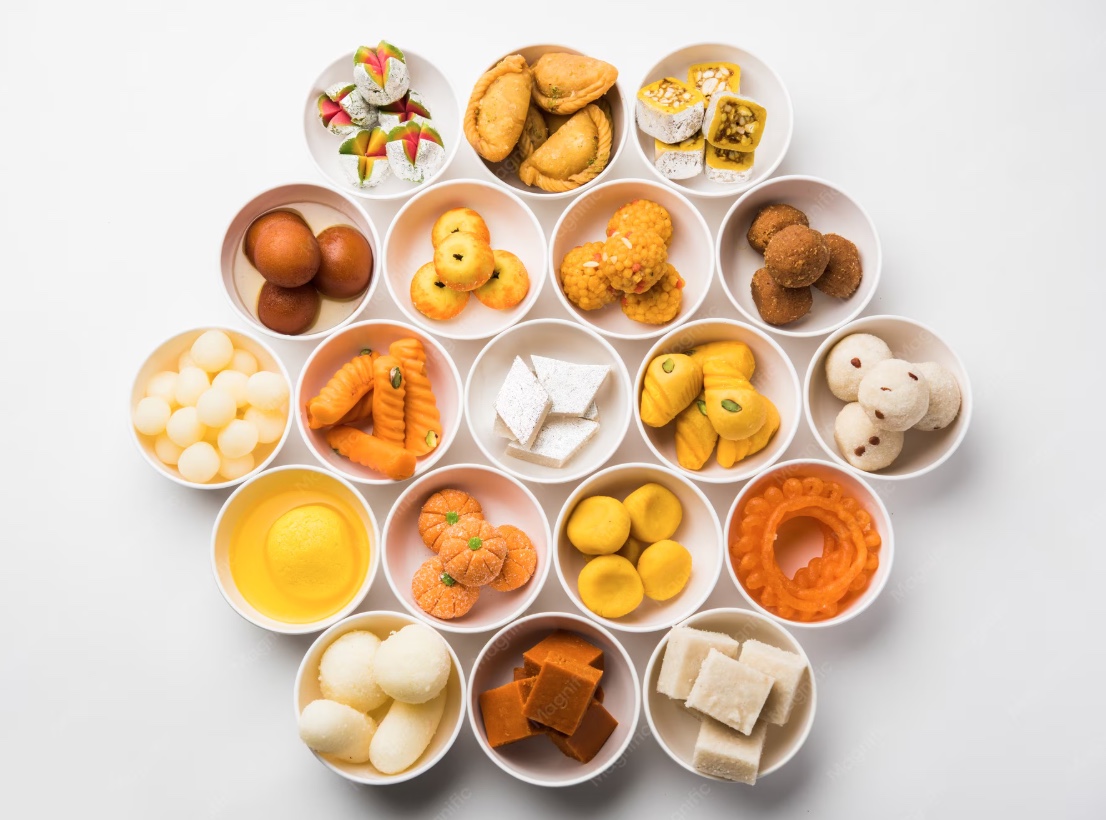
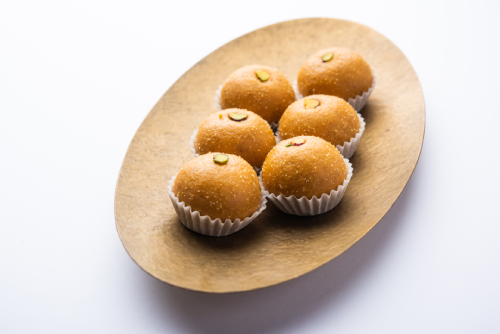
The ladoo family is the most diverse in Indian confectionery. Motichoor ladoo — made from tiny fried gram flour pearls (boondi) bound together with sugar syrup and fragrant with cardamom and saffron — is the quintessential North Indian celebration sweet. Besan ladoo uses roasted gram flour instead of boondi, producing a denser, nuttier sweet. Sesame ladoo (til ladoo) is a winter staple made with jaggery — the combination of sesame and jaggery is considered warming and energising in both Ayurvedic and folk medicine.
Burfi is the most versatile category — kaju katli (cashew fudge) is the most prestigious, served at weddings and gifted at Diwali; coconut burfi is simpler and more everyday. Halwa takes many forms: badam halwa (almond) is the richest and most celebratory; carrot halwa (gajar ka halwa) is the most widely made at home during winter.
The Role of Sweets in Indian Cultural Life
The distribution of sweets in Indian culture follows a deep social logic. Sweets offered at temples (prasad) are sacred — they are given as gifts from the divine. Sweets made and shared at festivals are acts of community and reciprocity. Sweets given at celebrations (birth, marriage, exam results, promotions) are acts of sharing joy. Even the act of putting a sweet in someone’s mouth — mukhwas — before they go on a journey is a gesture of love and good wishes.
For the Indian diaspora, sending or receiving a box of authentic Indian sweets from Village Masala carries all of this cultural weight. It says: we remember, we celebrate with you, we are still connected. This is why we invest so carefully in the quality and authenticity of every sweet we make.
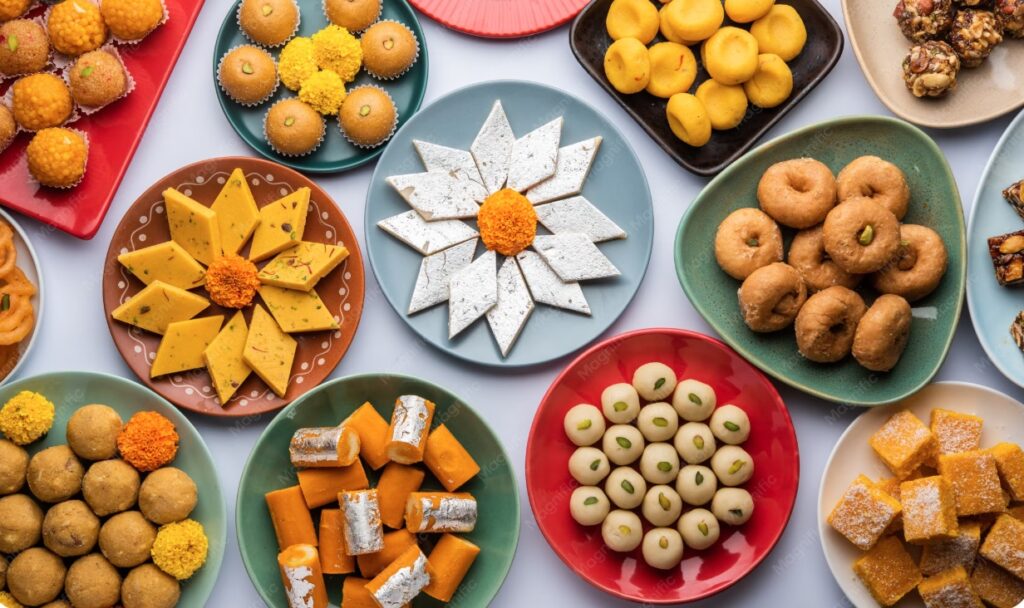
Kaju Katli is the most gifted Indian sweet during festivals — its diamond shape, silver leaf coating, and cashew richness make it a luxurious offering. At Village Masala, our kaju katli is made from premium whole cashews, slow-ground and blended with pure sugar syrup — no artificial flavours, no substitutes.