Masala Chai from Scratch: The Art of the Perfect Indian Spiced Tea
The masala chai sold in Western cafés — sweet, milky, poured from a syrup bottle — bears only a passing resemblance to the real thing. Authentic masala chai is a living drink: the spice ratios shift by season, by region, and by personal preference. In winter, ginger and black pepper dominate. In summer, the spicing is lighter, with more cardamom and fennel. At Village Masala, we want you to experience chai the way it is made in Indian homes — from whole spices, freshly crushed, simmered slowly in a mixture of water and full-fat milk until the colour deepens and the kitchen fills with that unmistakable aroma.
The Spice Foundation: What Goes Into Real Masala Chai
Every masala chai begins with black tea — strong, full-bodied Assam or Darjeeling is traditional, chosen for the way it holds up against milk and spice without becoming bitter. Avoid flavoured or blended teas; the flavour should come from your spices, not the tea bag.
The core spice blend is: green cardamom (crushed, not powdered), fresh ginger (grated or sliced thin), black pepper (whole, lightly crushed), cinnamon (a small stick), and cloves (2–3). Some families add fennel seeds for sweetness, star anise for a liquorice note, or dried rose petals for a floral lift. At Village Masala, all of these whole spices are available — and buying whole rather than pre-ground is essential. Pre-ground spices lose their volatile oils within weeks; whole spices crushed fresh retain their intensity for months.
“The difference between chai made with freshly crushed whole spices and chai made with pre-ground powder is not subtle — it is transformative. Whole spices release oils on crushing that are volatile and aromatic; these are gone within hours of grinding.”
The Technique: Simmering, Not Steeping
The fatal mistake most non-Indian chai makers make is treating it like English tea — steeping the tea bag in hot water and adding milk separately. Authentic masala chai is simmered. The water, milk, spices, and tea go into the same pan and cook together for several minutes, allowing the spice compounds to bind with the milk fats and create an emulsified, deeply flavoured drink that no amount of steeping can replicate.
The ratio of water to milk varies — some prefer equal parts, others use mostly milk with just a splash of water. For richer chai, use whole milk; for a lighter version, a 2:1 water-to-milk ratio works well. Bring the water to a boil, add your crushed spices and grated ginger, simmer for 2 minutes to extract the flavour, add the tea leaves or tea bags, simmer for another 2 minutes, then add the milk. Bring back to a gentle boil, strain, and sweeten with jaggery or sugar to taste.
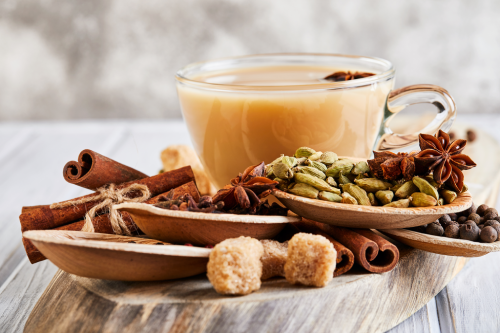
Village Masala’s Masala Chai Powder contains the authentic South Indian spice blend — cardamom, ginger, cinnamon, cloves, and black pepper — roasted and blended in traditional proportions. Add it to your daily chai for an instant upgrade with no preparation time.
Regional Variations Worth Exploring
India’s chai culture is as diverse as its food culture. Kolkata’s cutting chai is intensely strong and sweet, served in tiny glasses. Mumbai’s tapri chai is slightly milkier with less spicing. Kashmiri kahwa is a saffron-green tea with almonds and cardamom — closer to a herbal drink than traditional chai. South India’s filter coffee coexists with a gentler, cardamom-forward tea that is less spiced than its North Indian counterparts.
Village Masala stocks the full range of ingredients to explore all of these variations: whole spices for your masala blend, premium tea, saffron strands, green cardamom, and our Masala Chai Powder for days when you want authenticity without the prep time. Explore, experiment, and find the version that tastes like home to you.