Moringa, Triphala, and Ayurvedic Herbs: What They Are and How to Use Them
Ayurveda, India’s 5,000-year-old system of traditional medicine, has never been more relevant to modern health conversations. Its herbs and formulations are now studied in peer-reviewed journals, recommended by integrative medicine practitioners, and sold in health food stores around the world. But context matters. Understanding what these herbs actually do — and how to use them correctly — is more valuable than following wellness trends blindly. At Village Masala, we stock a range of traditional Ayurvedic herbs and powders sourced from trusted Indian suppliers, and we want to give you a clear, honest guide to each.
The Big Three: Moringa, Triphala, and Amla
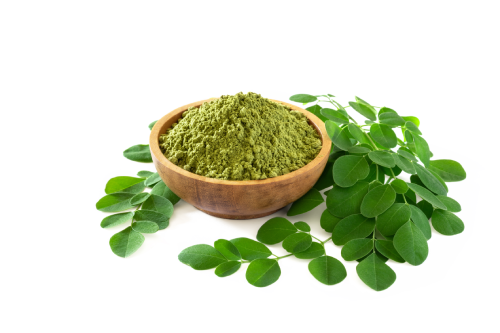
Moringa (drumstick leaf) powder has earned its “superfood” label honestly. Gram for gram, moringa leaves contain more Vitamin C than oranges, more calcium than milk, more potassium than bananas, and more iron than spinach. As a powder, it can be stirred into smoothies, yoghurt, or warm water daily. The taste is mild — slightly grassy and green — making it easy to incorporate without masking other flavours.
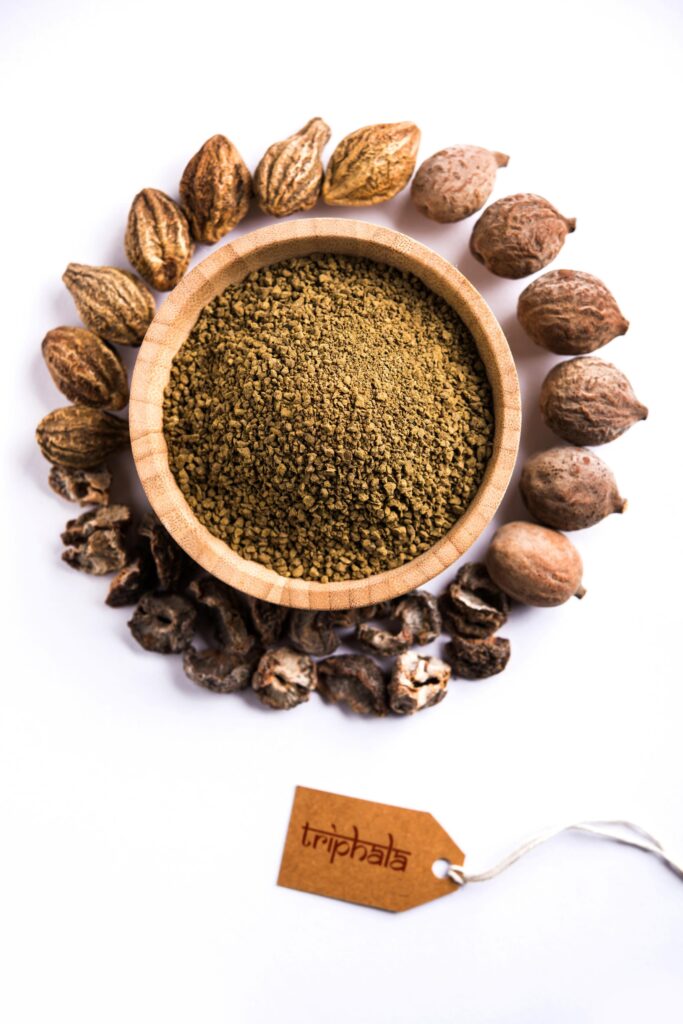
Triphala is one of Ayurveda’s most important formulations: a blend of three fruits (amla, haritaki, and bibhitaki) that has been used for thousands of years as a digestive tonic, detoxifier, and general health promoter. Modern research has found antioxidant, anti-inflammatory, and prebiotic properties — it appears to support healthy gut microbiome diversity. Take a teaspoon in warm water before bed for digestive support.
Amla (Indian gooseberry) is India’s most celebrated medicinal fruit. Its Vitamin C content is extraordinarily high — but unlike synthetic Vitamin C, amla’s vitamin content is bound in a tannin complex that makes it far more stable and bioavailable.
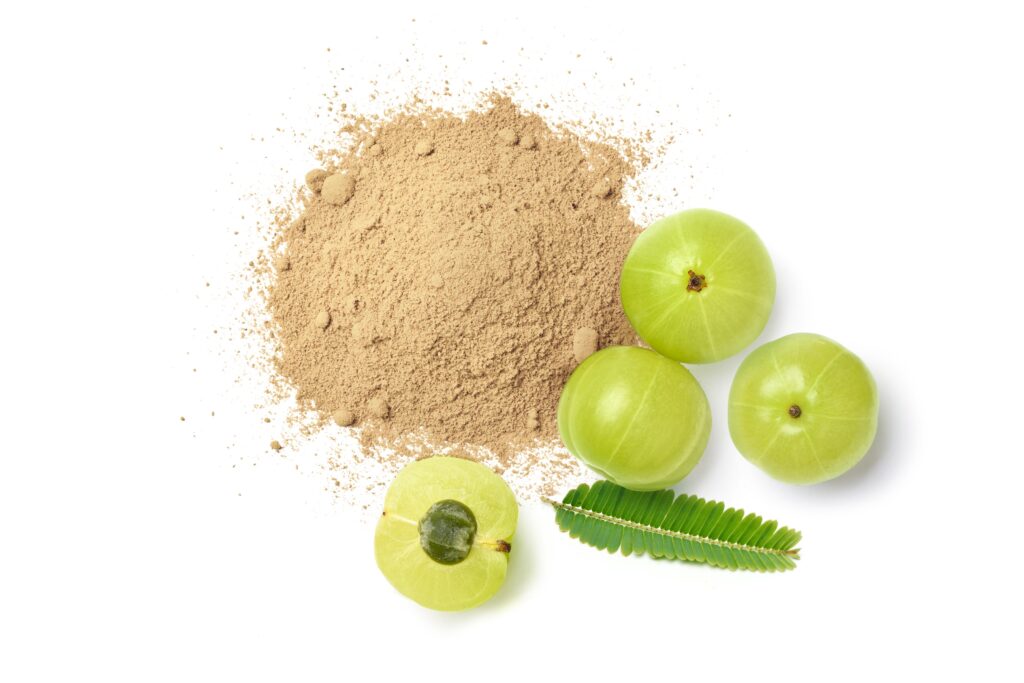
” Amla contains one of the most stable natural forms of Vitamin C in the plant kingdom. Unlike the Vitamin C in citrus fruits, which degrades rapidly with heat, amla’s Vitamin C remains partially active even after cooking or drying — which is why it retains its medicinal value in pickles, powders, and chutneys “
Tulsi, Bhringraj, and Herbs for Specific Benefits
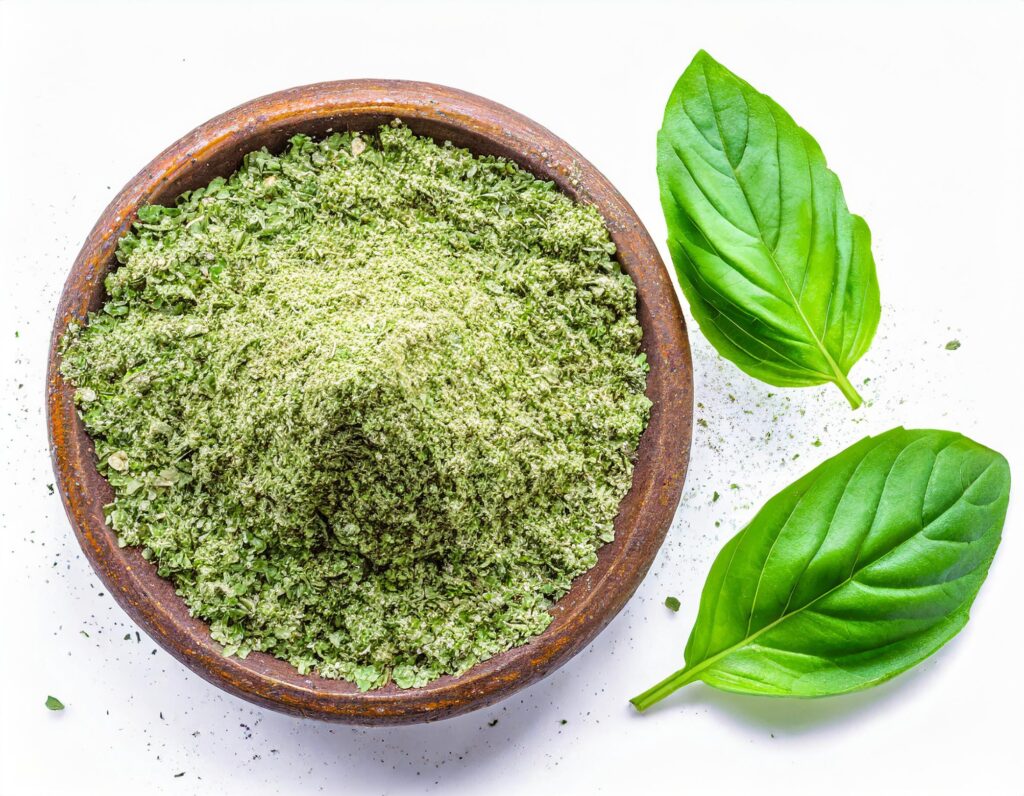
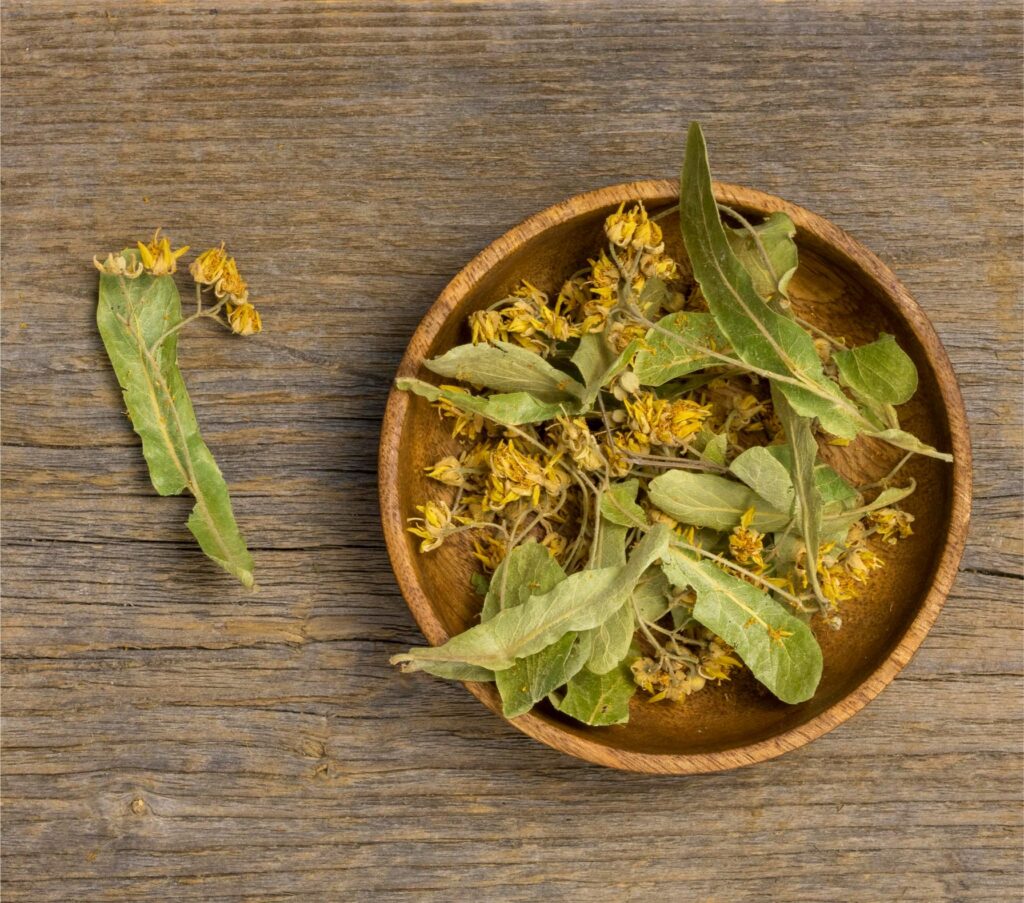
Tulsi (holy basil) is considered sacred in Hindu tradition — grown in most Indian homes and used in daily prayer. Medicinally, it is classified as an adaptogen — a substance that helps the body manage stress more effectively. Tulsi powder or tea taken daily has been shown in studies to reduce cortisol levels and improve cognitive function under stress.
Bhringraj (Karisalankanni) powder is specifically valued for hair health — it is one of Ayurveda’s primary herbs for strengthening hair roots, reducing hair fall, and improving scalp health. It is used both internally (in small doses with warm water) and externally (mixed with coconut or sesame oil and applied as a hair mask). Bermuda grass powder (Arugampul) is another traditional Tamil herb — used as a cooling drink in summer and valued for kidney health and blood purification in traditional practice.
How to Use Ayurvedic Herbs Safely
Ayurvedic herbs are generally safe when used as food or beverage ingredients at traditional doses. However, concentrated extracts and high-dose supplements carry risks — especially for people on medication or with existing health conditions. The traditional Indian approach — using these herbs daily at low doses as part of food and drinks rather than as pharmaceutical-dose supplements — is both safer and more sustainable.
The practical advice: start with one herb at a time. Add a teaspoon of moringa powder to your morning smoothie for two weeks and notice how you feel. Then introduce triphala in warm water at bedtime. Then explore tulsi tea as your evening drink. This gradual approach allows you to observe the effects clearly and build a sustainable daily herbal practice. At Village Masala, all our herb powders are food-grade, sourced from verified suppliers, and packed without additives or fillers.